Korean Bibimbap
Highlighted under: Authentic Global Cuisine Collection
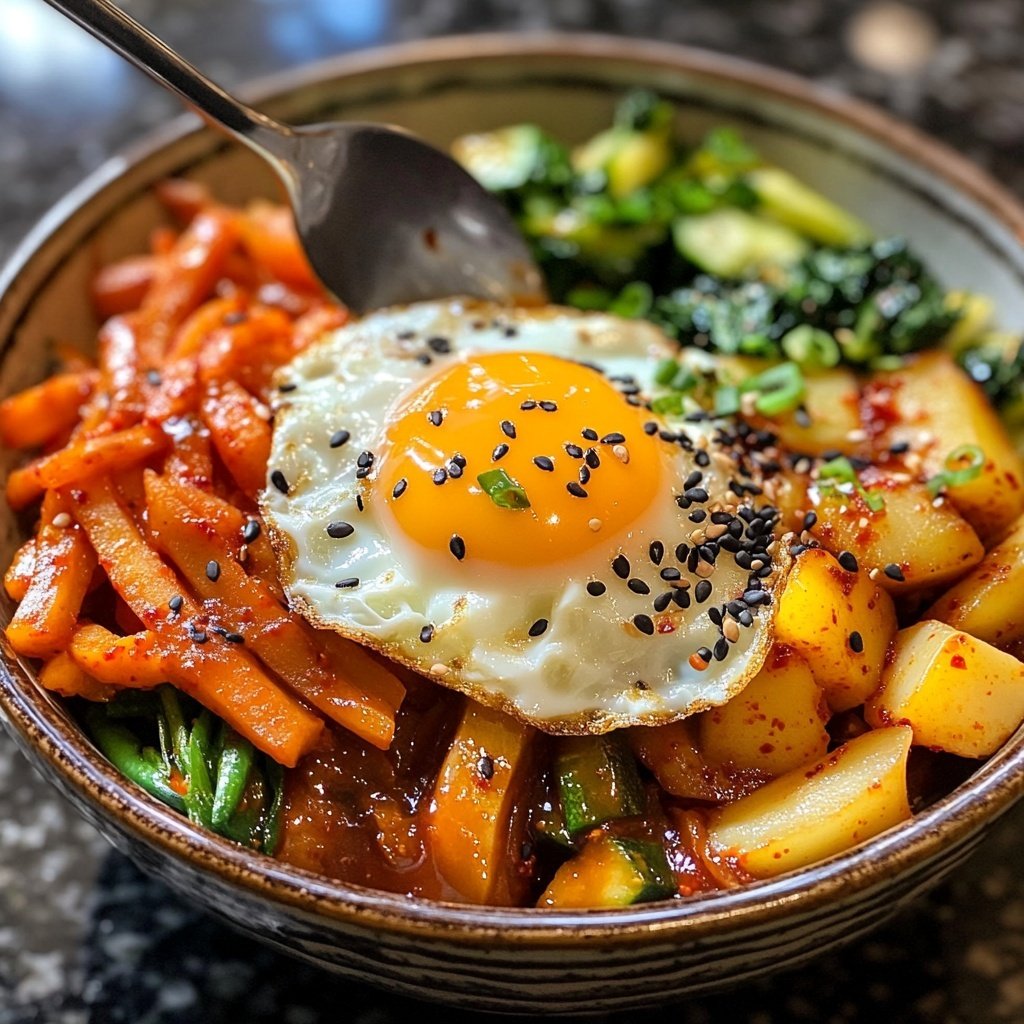
Korean Bibimbap is a vibrant and nutritious dish that combines rice, vegetables, and protein, all topped with a fried egg and a spicy gochujang sauce.
Korean Bibimbap is a beloved dish that showcases the harmony of flavors and textures in Korean cuisine. With its colorful presentation and healthy ingredients, it's a meal that not only satisfies your hunger but also delights your senses.
Why You Will Love This Recipe
- A colorful mix of fresh vegetables and savory ingredients
- Easy to customize with your favorite proteins
- Deliciously spicy with the perfect kick from gochujang
The Origins of Bibimbap
Bibimbap is a traditional Korean dish that literally means 'mixed rice.' Its origins date back to the 19th century, where it was served as a royal dish during special occasions. The vibrant colors and variety of ingredients not only make it visually appealing but also represent harmony and balance in Korean cuisine.
Typically, bibimbap features a base of rice topped with assorted vegetables, meat, and a fried egg, all drizzled with gochujang. Each component is prepared separately to maintain its unique flavor and texture, making every bite a delightful experience. This dish embodies the essence of Korean cooking, focusing on fresh, seasonal ingredients.
Benefits of Bibimbap
Bibimbap is not just delicious; it’s also a powerhouse of nutrition. Packed with vegetables, it offers a wide array of vitamins and minerals. Spinach is rich in iron and fiber, while carrots provide beta-carotene. This dish supports a healthy diet, making it an excellent choice for anyone looking to eat balanced meals.
Moreover, the inclusion of protein sources, whether meat or tofu, ensures that bibimbap can be a fulfilling meal. The combination of ingredients allows for complete amino acid profiles, essential for muscle recovery and overall health. It’s a versatile dish that caters to various dietary preferences, making it suitable for vegetarians and meat lovers alike.
Customizing Your Bibimbap
One of the best things about bibimbap is its adaptability. You can customize it according to your taste preferences or dietary restrictions. Swap out traditional ingredients for your favorites—try using sweet potatoes, bell peppers, or even kimchi for an extra kick. The beauty of this dish lies in its flexibility, allowing you to get creative in the kitchen.
For protein, consider grilled chicken, beef, or tofu. You can even make it a seafood bibimbap by adding shrimp or fish. The key is to maintain a balance of flavors and textures, ensuring each ingredient shines. Experiment with different sauces as well; while gochujang is traditional, a drizzle of sesame dressing can impart a new flavor profile.
Ingredients
Gather all the ingredients before you start cooking.
For the Bibimbap
- 2 cups cooked white rice
- 1 cup spinach, blanched
- 1 cup carrots, julienned
- 1 cup zucchini, julienned
- 1 cup bean sprouts, blanched
- 1 cup shiitake mushrooms, sliced
- 4 eggs
- 4 tablespoons gochujang (Korean chili paste)
- 2 tablespoons sesame oil
- 1 tablespoon soy sauce
- Salt, to taste
- Sesame seeds, for garnish
Make sure to have everything ready before you start cooking!
Cooking Steps
Follow these steps to create your delicious Bibimbap.
Prepare the Vegetables
In a pan, heat 1 tablespoon of sesame oil and sauté each vegetable (spinach, carrots, zucchini, mushrooms, and bean sprouts) separately until tender. Season with a pinch of salt and set aside.
Cook the Eggs
In the same pan, fry the eggs sunny-side up in a bit of oil until the whites are set but the yolks are still runny.
Assemble the Bibimbap
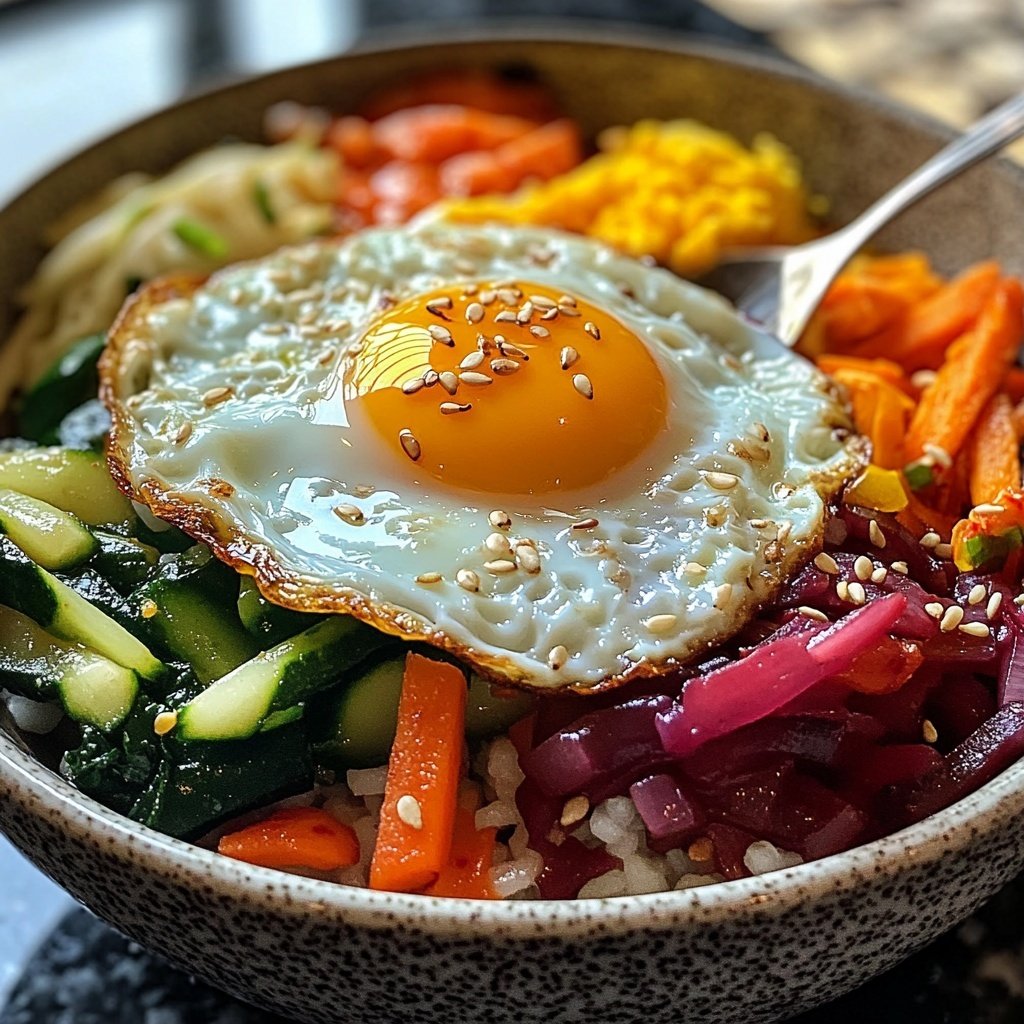
In a bowl, place a serving of cooked rice at the bottom. Arrange the sautéed vegetables on top of the rice. Place the fried egg in the center and drizzle with gochujang and sesame oil.
Garnish and Serve
Sprinkle with sesame seeds and serve immediately. Mix everything together before eating for the best flavor!
Enjoy your homemade Korean Bibimbap!
Pro Tips
- Feel free to add your protein of choice, such as grilled chicken, beef, or tofu, to make this dish even heartier.
Storing Leftovers
If you find yourself with leftover bibimbap, you’ll be pleased to know it can be stored for future meals. Simply place the ingredients in an airtight container and store them in the refrigerator. The vegetables and rice will stay fresh for about 2-3 days, although the textures may change slightly.
When ready to eat, you can reheat the rice and vegetables separately to preserve their flavors. If you prefer a cold dish, bibimbap can also be enjoyed as a salad, simply add some extra dressing to enhance the taste. It’s a convenient and tasty option for meal prep!
Serving Suggestions
Bibimbap is often served as a standalone meal, but it pairs wonderfully with various side dishes, known as banchan. Consider serving it alongside kimchi, pickled vegetables, or a light soup to create a well-rounded dining experience. These sides not only complement the flavors of bibimbap but also enhance the overall meal.
For a festive touch, consider garnishing your bibimbap with sliced green onions, a sprinkle of crushed red pepper, or additional sesame seeds. This not only adds visual appeal but also enhances the dish's flavor profile. Enjoy it with a refreshing drink, such as barley tea, for a complete Korean dining experience.
Questions About Recipes
→ Can I make Bibimbap in advance?
Yes, you can prepare the vegetables and rice in advance. Just reheat them before serving.
→ What can I substitute for gochujang?
If you don't have gochujang, you can use a mix of chili paste and a bit of sugar as a substitute.
→ Is Bibimbap healthy?
Yes! Bibimbap is packed with vegetables and can be customized to be low in calories and high in nutrients.
→ Can I make it vegan?
Absolutely! Just skip the egg and use tofu or tempeh instead for added protein.
Korean Bibimbap
Created by: Prudence Whitby
Recipe Type: Authentic Global Cuisine Collection
Skill Level: Intermediate
Final Quantity: 4 servings
What You'll Need
For the Bibimbap
- 2 cups cooked white rice
- 1 cup spinach, blanched
- 1 cup carrots, julienned
- 1 cup zucchini, julienned
- 1 cup bean sprouts, blanched
- 1 cup shiitake mushrooms, sliced
- 4 eggs
- 4 tablespoons gochujang (Korean chili paste)
- 2 tablespoons sesame oil
- 1 tablespoon soy sauce
- Salt, to taste
- Sesame seeds, for garnish
How-To Steps
In a pan, heat 1 tablespoon of sesame oil and sauté each vegetable (spinach, carrots, zucchini, mushrooms, and bean sprouts) separately until tender. Season with a pinch of salt and set aside.
In the same pan, fry the eggs sunny-side up in a bit of oil until the whites are set but the yolks are still runny.
In a bowl, place a serving of cooked rice at the bottom. Arrange the sautéed vegetables on top of the rice. Place the fried egg in the center and drizzle with gochujang and sesame oil.
Sprinkle with sesame seeds and serve immediately. Mix everything together before eating for the best flavor!
Extra Tips
- Feel free to add your protein of choice, such as grilled chicken, beef, or tofu, to make this dish even heartier.
Nutritional Breakdown (Per Serving)
- Calories: 500 kcal
- Total Fat: 18g
- Saturated Fat: 3g
- Cholesterol: 186mg
- Sodium: 620mg
- Total Carbohydrates: 68g
- Dietary Fiber: 5g
- Sugars: 5g
- Protein: 15g